Heatstroke in Dogs and Cats: Early Signs to Watch For
 BLEZ ANIMAL
Early Signs You Should Not Ignore on Hot Days
On hot days, dogs and cats can be affected by heat more quickly than many pet owners realize. Even a short time outdoors or in a warm environment can put stress on their bodies.
You may notice signs such as rapid breathing, panting, excessive drooling, or your pet seeming unusually tired or weak. These changes are often overlooked as normal reactions to heat, but they can sometimes be early signs of heatstroke.
In hot weather, dogs and cats can develop symptoms faster than expected. If you notice panting, a hot body, or unusual lethargy, start cooling your pet immediately and seek veterinary care as soon as possible.
What Is Heatstroke in Dogs and Cats?
Heatstroke is a condition in which a pet’s body is unable to regulate and release heat effectively, causing a dangerous rise in body temperature. This can occur in hot, humid environments or poorly ventilated spaces, especially in climates like Bangkok where heat and humidity are high.
Heatstroke Can Happen Indoors Too
- Hot and humid weather, especially during the summer
- Poor ventilation in the room where your pet stays
- Power outages causing air conditioning or fans to stop working
- Being left inside a parked car without air conditioning
- Outdoor activities or exercise during very hot weather
If You Notice These Signs, Act Quickly
- Rapid or labored breathing, excessive panting
- Gums that appear redder than usual
- Body temperature above 39.5°C (103.0°F), or clearly higher than normal
- Ears, paws, or inner thighs feeling unusually warm
- Unusual tiredness, weakness, or difficulty standing
- In severe cases, seizures may occur
Common symptoms are illustrated in the image below.
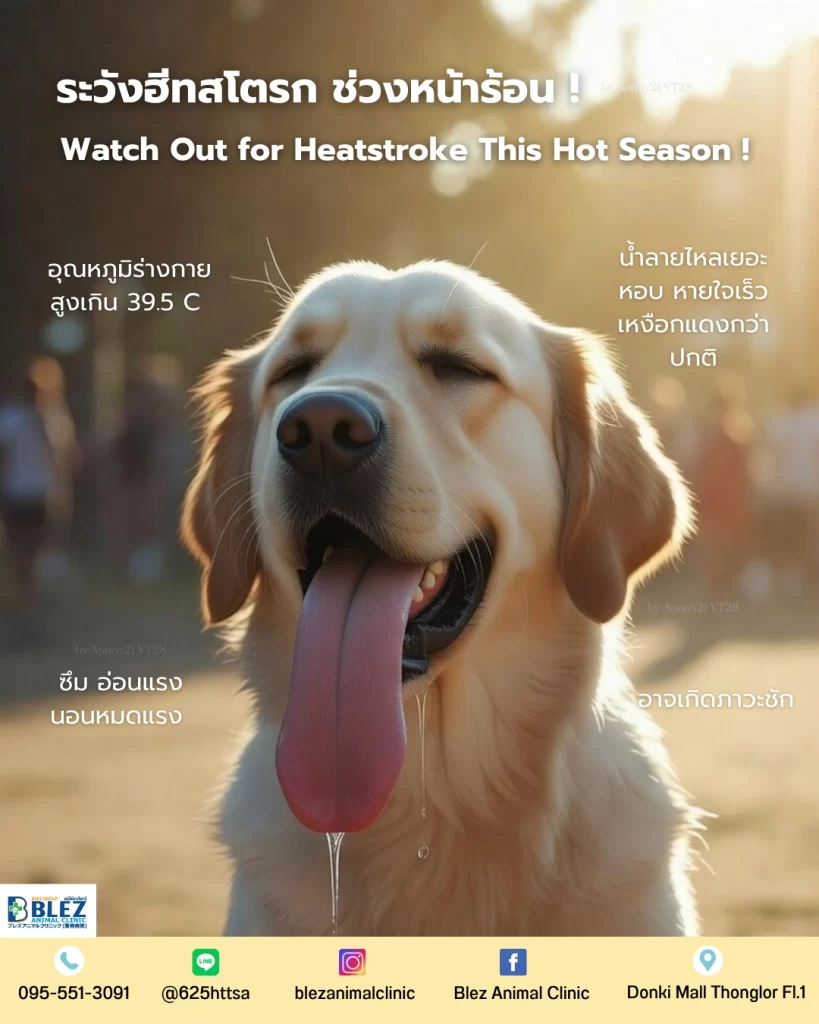
Image: From BLEZ Animal Clinic’s official Instagram
What to Do Before You See a Veterinarian
If you suspect heatstroke, take the following steps immediately:
- Move your pet to a shaded or well-ventilated area
- Use a towel soaked in cool (not ice-cold) water to wipe the body, ears, paws, armpits, and inner thighs
- Use a fan or air conditioning to help dissipate body heat if available
- Take your pet to a veterinary hospital as soon as possible
- If available, use a digital thermometer to take your pet’s temperature rectally, only if it is safe to do so.
Supervised by BLEZ Animal Clinic
If your pet seems unwell or shows unusual symptoms, it is always safer to consult a veterinarian. Heatstroke can progress rapidly, and early treatment is critical.
Please use the contact button below to reach us.
We regularly share pet care information on our social media channels. Follow us for short, easy-to-understand updates with visuals.
Related Posts
You can also view this content on Instagram:
View Instagram Post